Office branding that doesn't look like a cheap sticker. Why wall printing is the new standard in 2026?
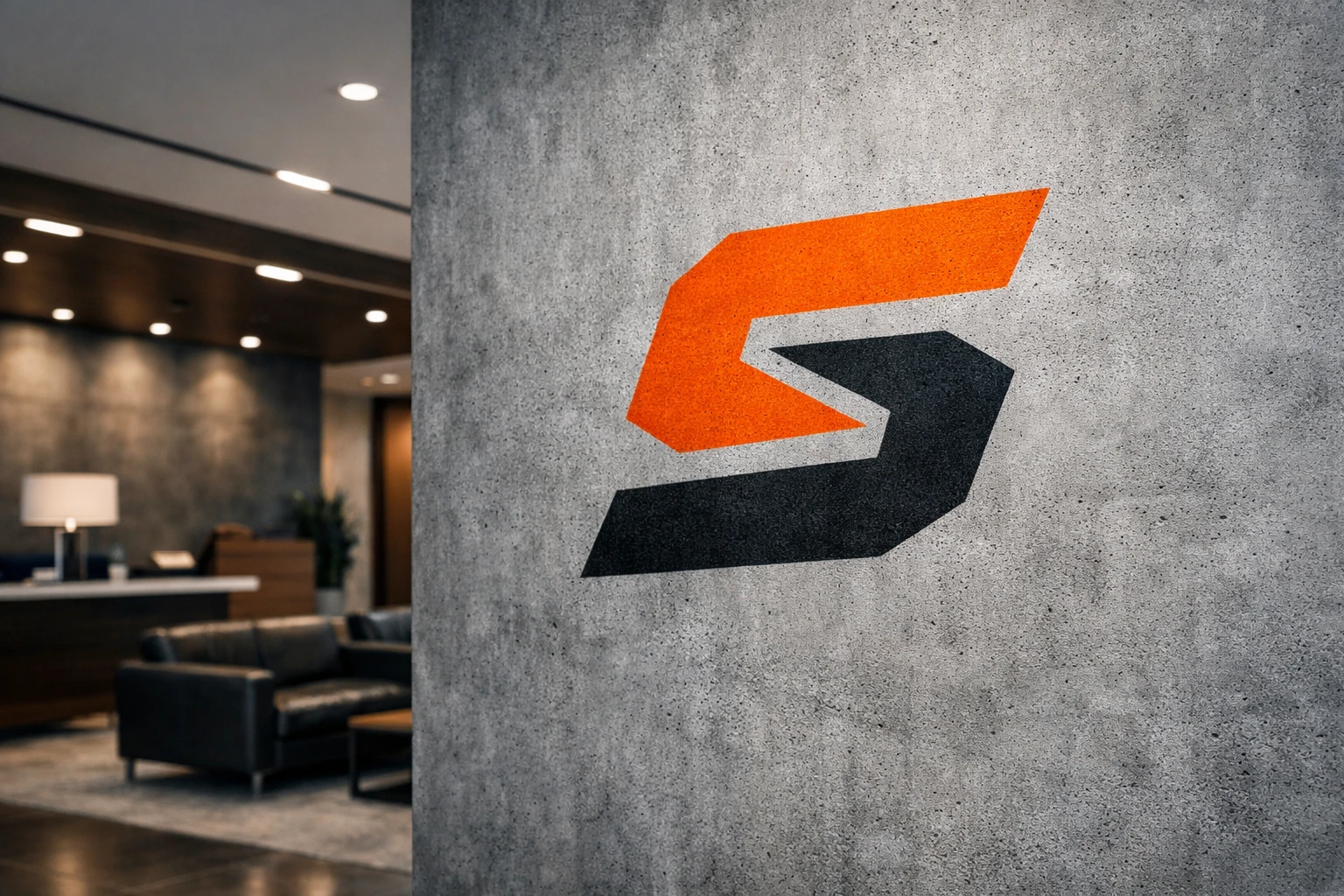
First impressions happen only once. When a key client walks into your office, what do they see? An elegant reception, modern furniture, and… a foil-cut company logo that starts peeling at the corners after a year?
In 2026, fit-out standards for commercial interiors have gone way up. Raw concrete, textured plaster, slats, and glass now dominate. In these spaces, traditional signage methods like lightboxes, plexiglass plaques, or vinyl stickers often look like a “foreign body.”
The solution architects and property managers now love is direct UV wall printing. See why this is an investment that pays off in brand perception.
The problem with foil (and why it’s embarrassing)
For years, the standard in branding was cut lettering from self-adhesive foil. But in a modern office, this solution has three disqualifying drawbacks:
- No integration with the surface: A sticker is always an add-on. On architectural concrete you can see air bubbles, and foil does not enter the wall pores. It simply looks cheap.
- Low durability: In corridors and circulation areas, stickers get caught by shoulders, bags, or cleaning carts. The result? Torn lettering after a few months.
- Surface limitations: Try applying foil to rough brick or raw wood. It’s impossible.
UV Wall Printing: your branding becomes part of the architecture
“Wall Printer” technology works differently. The machine applies ink directly to the wall and cures it with UV light in a fraction of a second.
This is not an “extra” on the wall. It becomes the wall.
-
Precision on concrete and brick
Raw concrete is the hallmark of modern office buildings. Our machine prints on it with surgical precision while preserving its natural texture. Ink settles into the micro-recesses, creating a “blended-in” tattoo effect. The logo looks as if it was designed in at the construction stage. -
Wayfinding you can’t scratch off
Floor markings, room numbers, directional arrows on columns in underground parking. Wall printing is resistant to abrasion and mechanical cleaning. There are no corners to lift with a fingernail (a common problem in restrooms and elevators). -
Eco-friendly and odor-free
Office renovation is usually associated with solvent fumes. UV printing is virtually odorless. We can deliver branding in an active office while your team works nearby. We emit no harmful VOCs, which is key for building certifications (e.g., BREEAM or LEED).
Where to use wall printing in your company?
The options go far beyond a logo at the reception desk.
- Mission statement: Company values printed in elegant typography directly on the conference room wall (no frames or plexiglass).
- Relax zones: Large-format botanical graphics on wood or concrete in kitchens and chillout areas.
- HSE signage: Durable pictograms and instructions printed directly on warehouse or production hall walls.
- Glass partitions: We print on glass too. We can create a “frosted glass” effect or full-color graphics that provide privacy while letting light through.
How much does it cost? (Brand ROI)
A lightbox or 3D channel letters can cost several thousand PLN, plus complex installation (drilling into walls). Foil is cheaper, but not durable, and yearly replacement creates cost and mess.
Wall printing is the “sweet spot.”
It is cheaper than complex 3D lettering and infinitely more durable than foil. You pay for the service once. You don’t worry about peeling elements. And when you move offices? You simply repaint the wall, no filling of mounting holes required.
Summary: Take care of the details
Your office is your business card. Don’t let a cheap sticker ruin the effect you’ve built for years. Choose technology that matches your business: modern, durable, and professional.
Are you an architect or property manager?
Contact us. We’ll make a test print on your surface (concrete, glass, wood) so you can see the difference with your own eyes.